Shangri-La


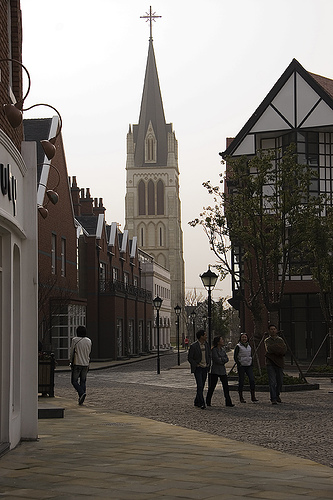
Originally called Zhongdian, Shangri-La was renamed in 2001 in a effort to boost tourism. A gateway for travelers into Tibet, the cobblestone-lined old town offers a charming look into local life, which is as close as you can get to experiencing Tibet without actually being there.
A mere four-hour drive from Lijiang and six from Dali, Shangri-La is an excellent hub, conveniently located near attractions like the Songzanlin Monastery, Tiger Leaping Gorge, Pudacuo National Park, Napa Lake, Xiagei Hot Springs and Haba Village.
Despite the rustic, mountain-town atmosphere, Shangri-La has a number of cafes, bars and hotels that cater to foreign visitors, offering mixtures of local and Western food and simple or extravagant amenities.
History
Archaeological evidence dates human existence in this area back to the Western Zhou Dynasty (1050 - 771 BC). For hundreds of years the area was home to several tribes. During the Han Dynasty (206BC - 220AD) Shangri-La finally made contact with Central China. Today, the town is more Tibetan than Han Chinese with Tibetan architecture, customs and most of the 130,000 population who celebrate New Year according to the Tibetan calendar. As tourism continues to increase, Shangri-La will continue to develop at a rapid rate.
Climate
Shangri-La is about 3,300 meters above the sea level. The weather has a tendency to be humid with temperatures varying both at night and during the four seasons. Winters are cold with lots of snow and summers are the rainy season. The best seasons to go are spring and autumn, specifically May to July and September to October. Although visits during Spring Festival are not recommend as temperatures are generally quite low and indoor heating is still somewhat hard to find in Shangri-La.


 Ok, whatever people might say about the Bund –
  Inspired by the latest
 Originally expected to overtake France as the number one tourism destination in 2020, China is now tipped to do so six years earlier in 2014, according to the World Tourism Organisation. A story released today by our
 The giant panda is high on the endangered species list; only a few thousand of these unique animals remain, all in Gansu, Sichuan and Shaanxi provinces. The Chinese government is making great efforts to increase their numbers. The Chengdu Panda Breeding Center constitutes one such effort. The 92 acre center is dedicated to providing pandas, and many other endangered species, with natural surroundings so that they can multiply. Plans are in place to add over 500 acres to the enclosure. The hope is that the center will achieve not only successful breeding plan, but that the enclosure will be large enough to simulate the wild so that the pandas can one day be released back into their natural home. The area was added to the


 Xi’an is one of China’s four ancient capitals (the others are Beijing, Nanjing and Luoyang). It has been China’s capital a number of times, during the Zhou, Qin, Han, and Tang Dynasties. The city is also the eastern end of the famous ancient Silk Road, which made it one of the richest and most important cities in China in its heyday.
 The Great Wall is reputed as one of the seven construction wonders in the world not only for its long history, but its massive construction size, and its unique architectural style as well.

 At the western end of China's Silk Road - has been the stopping-off point for travelers for at least 2,000 years. Today's silk and spice merchants, rug dealers and livestock sellers could well be descendants of the locals who provisioned the Chinese silk traders 2,000 years ago and Marco Polo a mere 900 years ago. This oasis surrounded by the arid Pamir Plateau and snow-capped mountains now boasts a population of 340,000, high-rises and highways, but its exotic pleasures remain.