Some Like It Boiling
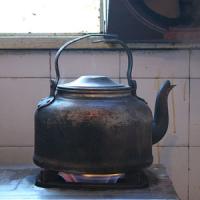
The scene: a typical Chinese restaurant. It’s a brutally hot day in August and you’ve just ordered your food - possibly Gong Bao Ji Ding (宫ä¿é¸¡ä¸) if you’re that typical foreigner whose ordering vocabulary is sorely limited. But what will you have to drink? A nice tall glass of ice water would go down particularly well in all this heat, and maybe you even know how to ask for it (bing shui "冰水" for the uninitiated). Depending on whether or not the restaurant you’re in caters to foreigners regularly, you will get one of two reactions: an odd look or a panicked one. If the former, the restaurant serves foreigners often and while there’s always a chance they will actually bring you cold water, they’ll probably bring you a nice pot of boiling hot water and a bucket of ice. If get the panicked look instead, your hapless waitress may not ever have served foreigners before and, more likely than not, she doesn’t even know if her restaurant has ice (it probably doesn’t).
Maybe the explanation is simple: perhaps the Chinese simply like the way tea tastes or find plain water bland and boring. Maybe. Or perhaps there is another, no less simple explanation: health. Seasoned first world travelers all know one thing, either through uncomfortable personal experience or by word of mouth: don’t drink the tap water when you travel, not unless you want to spend a large part of your vacation within a few feet of a toilet, or worse, in a hospital bed. But, you don’t need a water purification plant to treat your water. All you really need to make sure the water you’re drinking is safe is a pot, a stove, and a few minutes to wait for it to boil.
The Chinese know this as well as anyone. Indeed if you ask a Chinese person why he prefers his water boiled, he’ll likely tell you that it’s better for the stomach. And what’s more, the Chinese penchant for boiling their water has very visible positive results, past and present. Boiled water significantly reduces the number of deaths in China each year from diarrhea caused by drinking unpurified, contaminated water (1). During the 19th century when thousands of Chinese workers immigrated to the United States to work on the railroads, American laborers were plagued by cholera and dysentery because of the poor sanitary conditions. The tea-drinking Chinese, though they were mercilessly teased for the habit, largely escaped those particular health troubles (1). So, as far as ice water in China goes, it might be wise to do as the Chinese.
